
How to Prevent Vehicle Damage During Lockout Services
Last Updated: November 4, 2026
Quick Summary
Preventing vehicle damage during lockout services means choosing a trained, accredited technician who uses non-destructive entry tools instead of force. A rushed entry with coat hangers or screwdrivers bends door frames, tears weather seals and scratches paint, and those repairs often cost more than the lockout itself.
Four parts take the hit when entry goes wrong: door frame, weather seals, paintwork, and window regulator or wiring harness.
Ask which trade body accredits the technician and request proof of insurance covering damage during entry.
Photograph any damage before anything is moved and ask the technician to note it on the job sheet or invoice.
Keep a spare key in a secure magnetic box under the chassis and check your fob battery every few months.
Salisbury Auto Keys is RAC-accredited, fully mobile, and covers every job with a 12-month guarantee.
Table of Contents
Why Lockout Services Go Wrong and What It Costs You
A rushed entry is the main reason lockout services cause damage.
Cheap, fast entry work can leave bent door frames, torn weather seals and scratched paint. Most of this damage is avoidable.
The cost is rarely just the repair. A bent frame stops the window sealing properly, which lets in wind noise and water. Water in a door cavity can reach the wiring harness.
The Components Most Often Damaged
Four parts take the hit when entry goes wrong:
Door frame: bends under force, so the window no longer seals
Weather seals: tear or stretch, causing leaks and wind noise
Paintwork: scratches from metal tools and improvised probes
Window regulator and wiring harness: damaged by tools pushed too deep into the door cavity
Any of these can cost more to fix than the lockout itself. A certified technician knows where each one sits and works around them.
Four components take the hit when entry goes wrong, and each one can cost more to fix than the lockout itself.
Component | How it gets damaged | Consequence |
Door frame | Bends under force | Window no longer seals |
Weather seals | Tear or stretch | Leaks and wind noise |
Paintwork | Scratches from metal tools and improvised probes | Visible damage and scuff marks |
Window regulator and wiring harness | Tools pushed too deep into door cavity | Costly internal repairs |
The Risks of DIY Car Unlocking
DIY car unlocking is the biggest source of preventable damage we see. A coat hanger or a screwdriver feels like a free fix.
Then there is the central locking system. Poking around a modern door can trigger the immobilizer or upset the electronics. You may get the door open and still not start the car.
There is also a naming trap worth clearing up. Industrial Lockout/Tagout rules cover isolating energy during maintenance. They have nothing to do with getting into a locked car.
Tools to Avoid Using on Your Vehicle
Coat hangers: bend easily, scratch paint, and catch on wiring
Screwdrivers: chip paint and bend door frames
Electrical wire: can short the central locking system
Inflatable bags without training: over-extend the frame if used carelessly
Watch out: forcing a door with a screwdriver can bend the frame enough to break the window seal. That repair often costs more than a professional call-out.
How to Inspect Your Vehicle for Damage After a Failed DIY Attempt
If you have already had a go at opening your car yourself, work through this inspection before you drive far. It can catch a problem while it is still cheap to fix.
Door alignment: close the door gently and look along the shut lines. A frame that has been forced will sit proud at the top or bottom corner, and the gap will be uneven compared with the opposite door.
Weather seals: run a finger along the rubber. Torn or stretched seals feel rough and may sit away from the frame. Look for pinched sections near the latch.
Paint and trim: check the top edge of the door and the area around the handle for scratches, chips, or scuff marks from metal tools.
Window operation: raise and lower the window fully. A regulator damaged by a tool pushed too deep will judder, slow down, or stop before it reaches the top.
Central locking and electrics: lock and unlock the car several times. Listen for a weak actuator and check that the interior light and windows still respond. A shorted circuit often shows up as a fuse that blows repeatedly.
Water ingress: after rain or a car wash, check the door card and the carpet edge near the sill for damp. Water reaching the wiring harness is the most expensive outcome of a torn seal.
A common pattern is for damage to stay hidden until the weather turns. If you find any of the above, get it assessed before the door cavity takes on water.
The Insurance Position When DIY Goes Wrong
Check your own motor policy to see how it treats damage you cause during an attempt to gain entry. A professional call-out is carried out by a business that holds its own insurance.
DIY Versus Professional: The Real Cost Comparison
A professional call-out is a cost you can confirm before work starts, whereas the cost of a botched DIY attempt is open-ended. Repairs to parts such as a window regulator, a door seal or a wiring harness can add up quickly. For pricing, contact Salisbury Auto Keys directly for a quote.
How to Verify Locksmith Accreditation Before You Book
Verifying accreditation is a quick check that helps protect your car. Ask for the technician's accreditation body and insurance details before anyone touches your vehicle. A legitimate auto locksmith will answer without hesitation.
Here is a simple checklist to run through:
Ask which trade body accredits them
Request proof of insurance that covers damage during entry
Confirm they carry the tools for your make and model
Check reviews on Facebook, Yell, or Google
Get the price confirmed before they start
If you want a full walkthrough, our guide on how to verify locksmith accreditation breaks down each step. For the insurance side, this guide on how to verify an insured auto locksmith explains what cover to look for.
What Accreditation Actually Means
Accreditation is not a single badge. It usually means the technician has been vetted by a trade body, has demonstrated competence on modern locking systems, and works to a code of practice. Accreditation may come from a trade body or from a motoring organisation.
Insurance is the second half of the picture. Public liability cover protects you if the technician damages your vehicle or property; it is not the same as the technician's own motor insurance.
Credentials are worth checking as vehicles become more complex.
What to Do If a Professional Service Damages Your Vehicle
This is the step almost no guide covers, and it is the one that matters when something goes wrong.
Stop and document. Photograph the damage before anything is moved, including close-ups of the door frame, seals, and paint, and a wide shot showing the vehicle and the technician's van.
Get it in writing. Ask the technician to note the damage on the job sheet or invoice, and keep any text or email messages about the booking.
Notify the business in writing. Send a dated message describing the damage and asking for their insurer's details. Keep a copy.
Check your own cover. Tell your insurer what happened so they can advise you on your options, including whether a claim is appropriate.
Use the trade body. If the business is accredited, its code of practice usually includes a complaints procedure. Escalate to the accrediting body if the business does not respond.
Know the consumer route. For a service bought as a consumer in the UK, the Consumer Rights Act 2015 generally requires work to be carried out with reasonable care and skill (Consumer Rights Act 2015). Seek independent advice from the relevant consumer body if you are unsure of your options.
Watch out: accepting a cash settlement on the spot without a written record can make it much harder to claim later if the damage turns out to be worse than it first appeared.
A certified technician will welcome questions about accreditation and insurance. Someone who dodges them is a risk to your vehicle.
Non-Destructive Vehicle Entry Techniques That Protect Your Car
Non-destructive entry means opening the car without bending, scratching, or forcing anything. A trained technician uses professional tools that protect the paint, seals, and internal parts at every step.

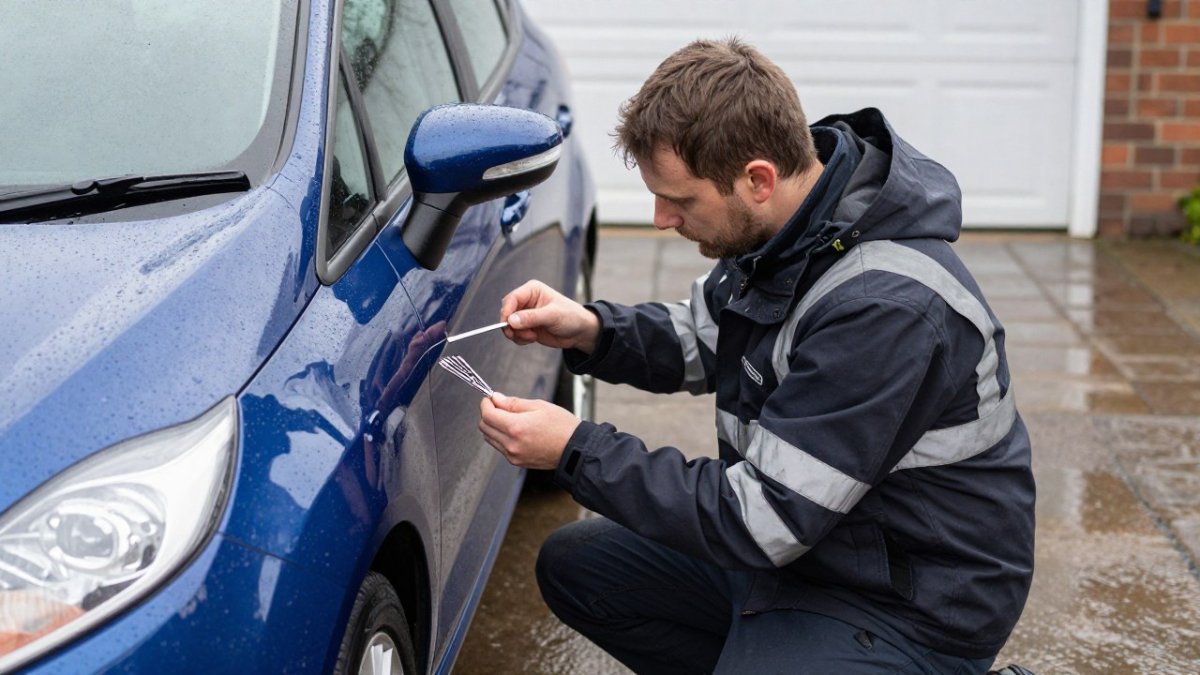
Methods used by trained technicians can include air wedges, long-reach tools and trim removal tools, chosen to avoid force on the vehicle. Ask any service provider which methods they will use on your car.
For a deeper walkthrough, read our guide on how to open a locked car door without a key. The key point is control.
What to Ask an Auto Locksmith Before They Start
Ask four questions before any work begins. The answers tell you whether you are dealing with a trained professional or someone who will improvise on your paintwork.
"Are you accredited and insured?" Ask for the details, not just a yes.
"What method will you use on my car?" A good technician explains it plainly.
"What is the full price, including call-out?" No surprises later.
"What happens if something gets damaged?" Their insurance should cover it.
A certified technician will welcome these questions. Someone who dodges them is a risk to your vehicle. The IMR Automotive Research insights on 2026 repair challenges point to rising technical demands on anyone working on modern vehicles, so credentials matter more than ever.
Preventative Habits That Cut Your Lockout Risk
Most lockouts never need to happen. A few small habits remove the most common causes, and they take seconds to build.
Keep a spare key in a secure magnetic box under the chassis
Check your fob battery every few months
Never leave keys in the ignition or on the seat
Use a retractable lanyard so keys stay with you
Keep a locksmith's number saved in your phone
Our guide on how to prevent locking keys in your car covers these habits in more detail. Keeping a spare key is a practical way to reduce the need for a lockout service.
Book a Damage-Free Lockout Service with Salisbury Auto Keys
Salisbury Auto Keys is a family-run, RAC-accredited auto locksmith. We are fully mobile, so we come to your home, workplace, or roadside. Every job is covered by our 12-month guarantee, and we are fully insured.
We serve drivers across Wiltshire, Hampshire, Dorset, and parts of Somerset. You can see the full range of car key repairs and entry assistance we offer.
Our technicians aim to use professional tools and explain the work before they start. Contact us for details of our pricing.
Frequently Asked Questions
Can a locksmith damage my car door during an emergency lockout?
Damage is possible if a technician uses force or improvised tools. The main risks are bent door frames, scratched paintwork and torn weather seals. A damaged frame can stop windows sealing correctly, which leads to wind noise and water leaks. Ask any lockout service which tools they will use and confirm they hold insurance before they begin work.
How do I know if an auto locksmith is qualified to work on my vehicle?
Check three things: accreditation, insurance and guarantees. Salisbury Auto Keys is RAC-accredited and fully insured. Ask for the business name and check its reviews on Facebook, Yell or Google. A qualified auto locksmith should also be able to explain how they will open your specific model without drilling or forcing the lock, and should offer a written guarantee on the work.
What tools do professional auto locksmiths use to prevent paint and seal damage?
Lockout services can use tools designed to limit contact with the vehicle's paintwork and seals. Ask the technician which tools they will use on your car before work begins.
How can I avoid damage when locked out of a modern vehicle with keyless entry?
Keyless vehicles need extra care because the door seals, wiring harness and window regulators sit close to the frame. Do not attempt to wedge the door open yourself, as this is how seals tear and frames bend. Call a professional lockout service and tell them the make, model and year so they bring the right tools. Keep a spare key stored securely and replace a failing fob battery early, since a flat fob is one of the most common causes of keyless lockouts.
Locked out and worried about damage? Ask us now and we will talk you through the safest way to get back in. Get started with Salisbury Auto Keys and protect your vehicle from the first call.
Comments