
What Features Should a Smart Lock for Rentals Have?
Last Updated: November 23, 2026
Quick Summary
The essential smart lock features for a rental property are multiple access methods, temporary codes you can set and revoke remotely, a clear access log, and a physical backup that works when the battery dies. Everything else is a bonus, so insist on a physical override before anything else.
Wi-Fi-enabled models are forecast to hold 43.0% of residential smart lock revenue in 2026.
Issue fresh codes per booking rather than reusing one code for every guest.
Check how long the access log is retained and whether you can export it.
Most smart locks run six to twelve months on AA cells or a rechargeable pack.
Budget roughly £150 to £300 per door for smart lock systems, excluding fitting and batteries.
Locked out or lost a key?
RAC-accredited mobile auto locksmiths covering Wiltshire, Hampshire and Dorset.
Table of Contents
What Features Should a Smart Lock for Rentals Have?
The smart lock features a rental property needs above all are four: multiple access methods, temporary codes you can set and revoke remotely, a clear access log, and a physical backup that works when the battery dies. Everything else is a bonus.
The market has moved fast. According to Lockii's 2026 market analysis, the global smart lock market is projected to grow from £2.45 billion in 2026 to £6.72 billion by 2036. Renters are driving much of that demand: Vision Management's 2026 survey found that 54% of renters prefer properties equipped with smart home technology.
Below, we break down the smart lock features that actually earn their keep in a rental, the ones that look good on a spec sheet but cause headaches, and how to match a lock to your letting type.
Smart Locks for Landlords: The Features That Earn Their Keep
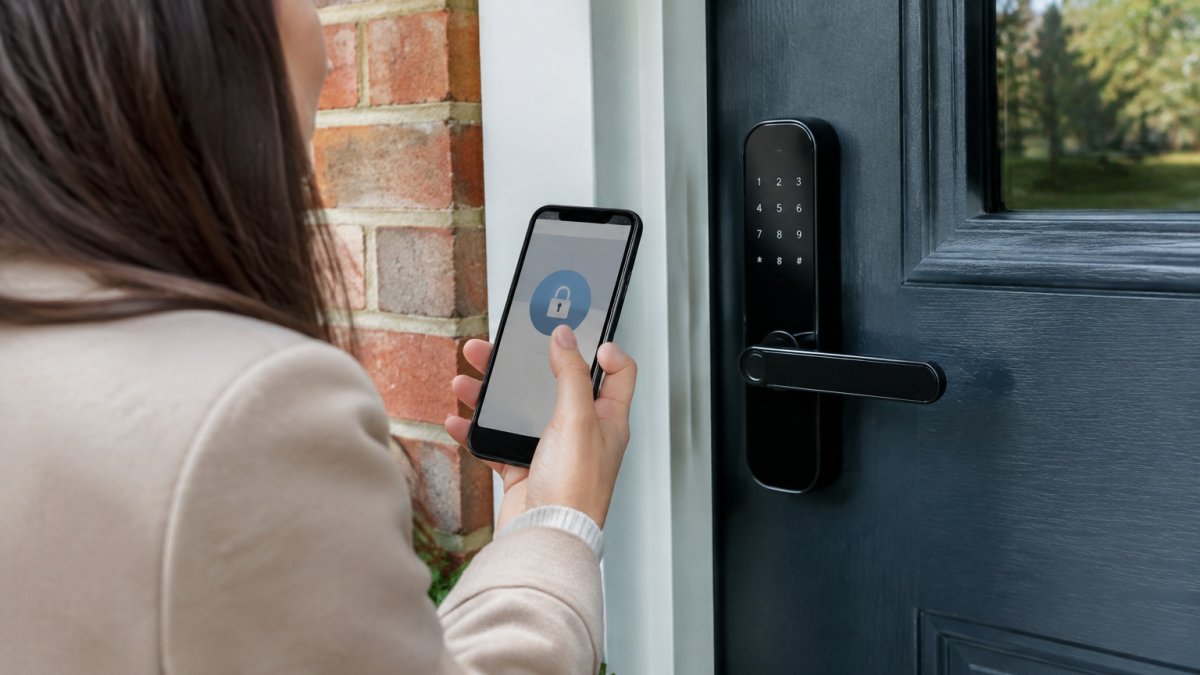
The feature that matters most to landlords is not the app. It is the ability to remove someone's access without visiting the property. A lock that lets you revoke a code from your phone saves a trip, a locksmith call-out and an awkward conversation.
Three features do the heavy lifting:
Multiple entry methods so a dead phone or forgotten fob never strands a tenant
Time-limited codes for cleaners, contractors and guests
An audit trail showing who entered and when
Wi-Fi-enabled models are becoming the default choice, with Future Market Insights' 2026 forecast projecting they will hold 43.0% of residential smart lock revenue this year. That connectivity is what makes remote code management possible.
What most buying guides miss is the failure case. A lock with no keyway and a flat battery is a locked-out tenant at 11pm. Insist on a physical override before anything else.
Access Methods Compared: PIN, Fingerprint, Fob and App
Each access method suits a different user, and most good rental locks offer at least two.
Method | Best For | Main Drawback |
PIN code | Guests, cleaners, contractors | Code sharing can leak |
Fingerprint | Long-term tenants | Fails on wet or worn fingers |
Fob or card | Older tenants, staff | Easy to lose, needs replacing |
Mobile app | Landlords managing remotely | Depends on phone battery and signal |
For short-term lets, a keypad PIN is the workhorse. For long-term tenancies, pairing a PIN with a fob gives tenants a familiar option. Fingerprint access is convenient but rarely essential in a rental, and it adds cost.
Temporary Access Codes for Guests and Short-Term Lets
Temporary access codes are the single most useful smart lock feature for short-term lets. You issue a code that works only between set dates and times, then expires on its own. No key handover, no meeting a guest at midnight, no lost key to replace.

A workable setup looks like this:
Guest code: active from check-in to check-out time only
Cleaner code: recurring window, revoked when the contract ends
Contractor code: single-use, expires after one entry
Master code: landlord only, never shared
The mistake we see is reusing one code for every guest. Once it circulates, you cannot tell who used it. Fresh codes per booking keep the access log meaningful and protect you if a deposit dispute arises.
If you are changing tenants and wondering whether the lock barrel needs attention too, our guide on whether to rekey locks after moving home covers the mechanical side.
Smart Lock Access Logs and Remote Management
Access logs turn a smart lock from a convenience into a management tool. Every entry is timestamped and tied to a user, so you can answer "who was in the flat on Tuesday?" without guessing.
Remote management matters most when you are not local. A tenant locks themselves out, you open the app, issue a one-time code, and the problem is solved in two minutes. No drive, no call-out fee.
Rently's 2026 apartment access report found that 61% of renters who had experienced a broken gate, camera, light or lock added their own security device, compared with 37% who had not. Tenants notice when access works reliably, and they notice when it does not.
Check two things before buying: how long the log is retained, and whether you can export it. A log that vanishes after seven days is useless in a dispute that surfaces a month later.
Renter-Friendly Smart Locks: Installation and Door Compatibility
Renter-friendly smart locks are the ones that fit without altering the door. If you rent rather than own, or you let a property and want to keep the original hardware intact, this is the feature set to prioritise.
Most smart deadbolts replace the existing thumb-turn on the inside and leave the outside cylinder untouched. That means no new holes, no drilling, and a straightforward swap back at the end of the tenancy. Check three measurements first: door thickness, backset, and the diameter of the existing bore hole.
Watch out: a lock that needs a wider bore hole than your door has will not fit, and enlarging the hole is a permanent change you may not be permitted to make.
Compatibility issues cluster around metal doors, narrow stiles and older mortice locks. Measure before you order, not after.
Battery Life, Backup Access and Failure Planning
Battery life is the specification landlords ignore until a tenant is locked out.
The deeper issue is not battery life itself but what happens when power, network, or the device fails.
Flat battery. Insist on a lock with either a physical keyway or an external power point (usually a micro-USB or USB-C terminal on the outside).
Network outage. Cloud-connected locks often fail open or fail closed depending on design. A lock that needs the cloud to validate a code will not open during an outage.
Firmware or app fault. App updates and firmware pushes can lock users out if a code schema changes.
Mechanical failure. The motor or clutch can fail while the battery is full.
Plan for failure before it happens:
Set a low-battery alert on the app and act on it
Keep a physical key with a trusted neighbour or in a key safe
Confirm the lock has a keyway or external power point
Test the backup entry method once a quarter
Tell tenants where the backup key is kept
Check whether codes are stored locally or only in the cloud
Record the lock model, firmware version, and admin account
Watch out: a lock that fails closed during a network outage is a tenant locked out at the worst moment, and a locksmith call-out at night will cost more than the lock did.
If you are hardening the front door at the same time, our seven deadbolt steps to harden your front door walk through the mechanical checks that pair well with a smart lock.
Total Cost of Ownership and Rental Law Considerations
Budget for more than the lock. RPM Excellence's 2026 rental upgrade guidance puts smart lock systems at roughly £150 to £300 per door, but that figure excludes fitting, ongoing batteries, and the cost of a locksmith if the hardware fails out of hours.
A three-year view is more honest. Add purchase, installation, batteries (typically two to four changes over three years), any gateway or bridge needed for remote access, and one probable out-of-hours call-out. A cheap lock that fails twice costs more than a mid-range one that does not.
On the legal side, a smart lock collects data about when a tenant enters and leaves.
Three obligations matter most in practice:
Consent and transparency. You do not usually need consent for access logs if you rely on legitimate interests, but you do need to tell tenants clearly. Consent is harder to rely on because it can be withdrawn, and a tenant withdrawing consent mid-tenancy leaves you without a basis for the log.
Data minimisation and retention. Keep logs only as long as needed for security and dispute resolution. A common pattern is 30 to 90 days, with longer retention only where a dispute is active. A log that vanishes after seven days is useless in a dispute that surfaces a month later, so check the retention setting before you buy.
Access and offboarding. When a tenancy ends, revoke the tenant's code, remove their user account, and change the admin password. Keep a record of the revocation. If the tenant asks for a copy of their entry data, you must be able to provide it.
Emergency access is the other legal pressure point. Most tenancies give the landlord a right to enter in an emergency, but a smart lock makes it easy to enter silently and without notice.
For more guidance on locks and access, browse our blog for related articles.
Choosing the Right Lock for Your Rental Type
Match the lock to how the property is used, not to the shiniest spec sheet.
Short-term let: prioritise temporary codes, remote management and a strong access log
Long-term tenancy: prioritise reliability, multiple access methods and a physical backup key
HMO or multi-let: prioritise per-user codes and independent access for each room
Single let you manage yourself: prioritise ease of installation and battery alerts
SmartLockPro's 2026 case study describes fitting seven locks on one property, a front door plus six bedrooms for separate guest lets. That is the multi-let pattern: each door needs its own code management, not one shared master.
For more guidance on locks and access, browse our blog for related articles.
Getting the right lock is half the job. The other half is having someone reliable when a key or lock fails anyway. Salisbury Auto Keys is a family-run, RAC-accredited auto locksmith covering Wiltshire, Hampshire, Dorset and parts of Somerset. We are fully mobile, fully insured, and every job carries a 12-month guarantee. Whether it is a lost key, a broken fob or a lockout at the roadside, we come to you and get you moving again.
Frequently Asked Questions
Are smart locks suitable for long-term rental properties?
Yes, provided the feature set matches the tenancy. Long-term lets need reliable keyless entry, a physical backup key, and clear rules on who holds admin rights. Smart lock access logs help landlords evidence entry during disputes, and temporary access codes for guests cover contractors and viewings without cutting new keys. Discuss the change with the tenant first, because swapping the external door hardware affects their security and privacy.
What happens if a smart lock's battery runs out?
Most models give a low-battery alert through the app weeks before failure, and many offer a 9V jump-start terminal or a keyed override outside. Plan for it: keep a backup key with a trusted neighbour or in a key safe, and check the app's battery status at each tenancy changeover. A lock that fails without an override turns a minor admin task into a locksmith call-out.
Can a landlord change smart lock access between tenants?
Yes, and this is one of the strongest arguments for smart locks for landlords. Deleting a tenant's user profile and issuing a fresh PIN removes their access instantly, with no rekeying cost. Pair that with a full access log export at check-out so the entry history is documented. Keep one master admin account with the landlord or letting agent, never solely with the outgoing tenant.
Can tenants use their own keys with a smart lock?
Renter-friendly smart locks usually retain a standard keyway, so the tenant keeps a physical key alongside their PIN or app access. That matters for accessibility and for anyone who does not want to rely on a phone. Confirm before buying that the lock uses a standard cylinder a local locksmith can replace, rather than a non-standard keyway that makes spare keys difficult to source.
Comments