
Benefits of Professional Fleet Lockout Services for UK Fleets
Last Updated: November 2, 2026
Quick Summary
Professional fleet lockout services send a trained mobile locksmith to the vehicle, so drivers don't need to wait for recovery or move the van. Good providers verify authorisation, gain entry without damage, and test the lock before leaving. The real cost of a lockout is vehicle downtime, so tracking response times helps fleets reduce it.
The call-out fee is the smallest part of a lockout bill; idle vehicles and driver time cost more.
A professional locksmith confirms vehicle ownership or fleet authorisation before opening anything.
Track mean time to attendance and mean time to recovery to measure lockout downtime.
Keep at least one spare key per vehicle in a secure, logged location.
Ask providers for response-time commitments in writing, with defined measurement and escalation terms.
Table of Contents
Every fleet manager knows the feeling. A van is parked at a site, the driver has lost the only spare key, and the next job is waiting. Fleet lockout services are a routine necessity, but lockouts quietly cost more than most people expect. This guide explains what professional fleet lockout services typically deliver, and what to check before you call one out.
Fleet professionals are under pressure to get more done with less. Efficiency and productivity are the top priority for 66% of fleet professionals heading into 2026, according to a YouTube fleet management trends survey. A vehicle sitting idle because nobody can get inside it works directly against that goal.
Why Fleet Lockouts Cost More Than the Call-Out Fee
The call-out fee is the smallest part of a lockout bill. The real cost is the time the vehicle, the driver and the job are all stuck waiting for fleet lockout services to arrive.
Per-mile running costs are also climbing. Insurance costs per mile rose by 6.4% in the first quarter of 2026 compared with the 2025 average, according to Millennials Maintenance fleet statistics. Every hour a van stands still is an hour you are still paying for it.
Replacing a stolen vehicle is far more expensive still. One fleet asset-protection analysis puts the loss from a single stolen vehicle at roughly £26,500 to £49,000, based on the Spytec fleet management statistics research. Good key control and secure access processes help limit that risk.
How a Mobile Locksmith Responds to a Fleet Lockout
A professional mobile locksmith comes to the vehicle, so the driver does not have to be moved or the van recovered first. Most fleet lockout services follow the same sequence.

Confirm the vehicle and the driver. The locksmith checks ownership or fleet authorisation before opening anything. This protects both the company and the driver.
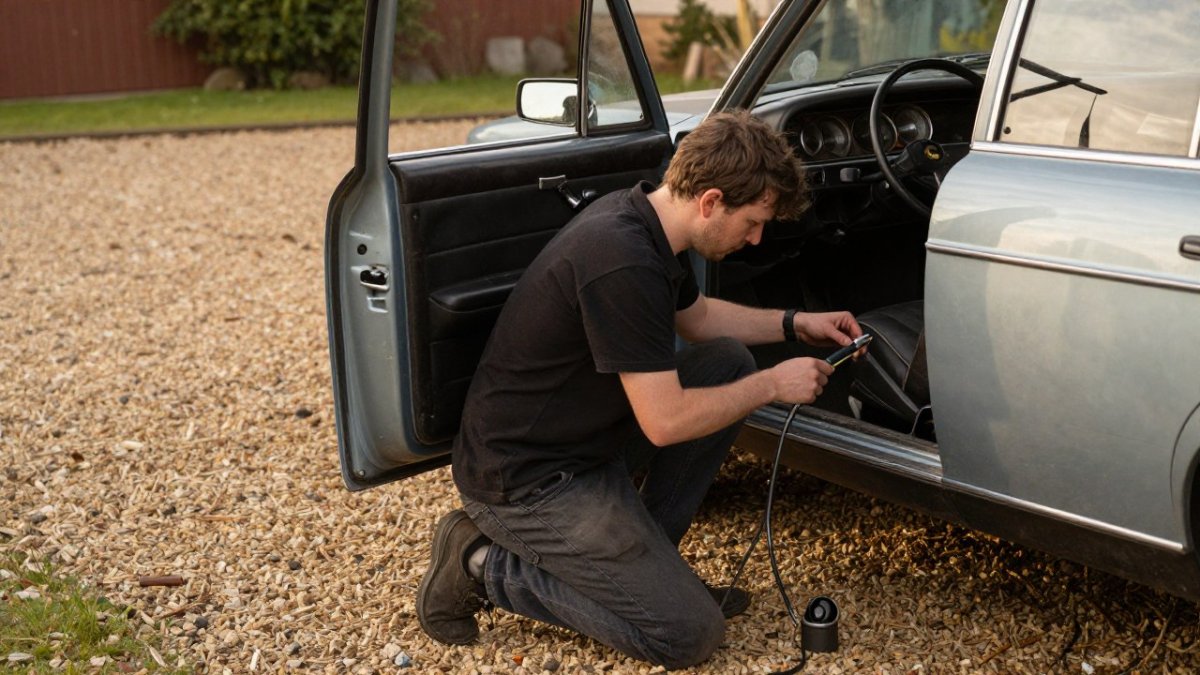
Assess the lock. Some vehicles open with a simple tool. Others, particularly newer models with electronic fobs and high-security locks, need more specialist equipment. Knowing which applies to your fleet helps set expectations.
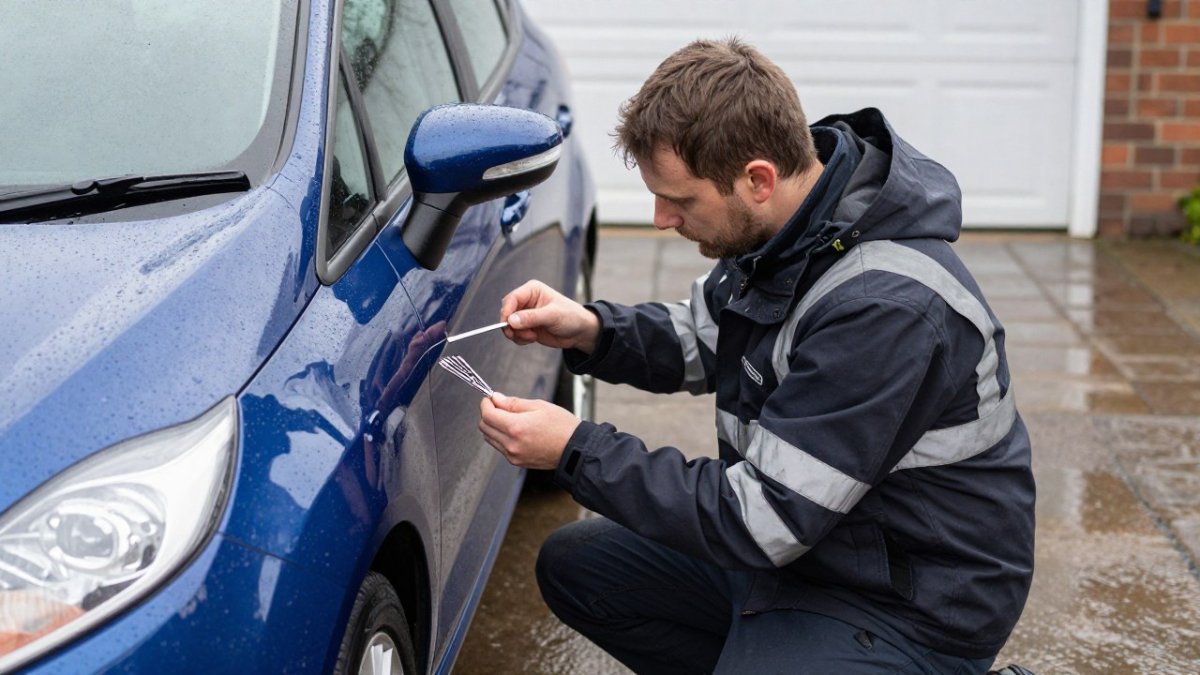
Gain entry without unnecessary damage. The aim is to get the driver back in, not to leave the door or frame damaged.
Test the result. Before leaving, the locksmith should confirm the vehicle locks and unlocks properly and that nothing has been left broken.
Salisbury Auto Keys is RAC accredited and fully mobile, attending home, workplace and roadside locations.
Keeping Fleet Vehicle Downtime to a Minimum
Downtime is where lockouts do the most damage, and it is also where most fleets have the least data on their fleet lockout services. The call-out fee is visible; the cost of a van standing idle for three hours is not. Closing that gap starts with measuring it properly.
A practical downtime model has four components. First, response time: the minutes from the driver reporting the lockout to the technician arriving. Second, entry time: how long the actual opening takes once on site. Third, recovery time: any additional work such as key cutting, fob programming or lock repair. Fourth, schedule impact: the routes missed, deliveries delayed or jobs reassigned while the vehicle is out of action.
Fleet managers can track a small set of KPIs without buying new software:
Mean time to attendance (MTTA): average minutes from call logged to technician on site, split by depot and by time of day.
Mean time to recovery (MTTR): average minutes from arrival to vehicle back in service.
Lockouts per 100 vehicles per month: normalises incident frequency so depots of different sizes can be compared.
Repeat-lockout rate: the share of vehicles with more than one lockout in a rolling quarter, which usually points to a key-control or driver-handover problem rather than bad luck.
Schedule impact hours: total driver and route hours lost, which converts directly into cost using your own labour and vehicle rates.
A common pattern is that a small number of vehicles account for a disproportionate share of lockouts. Recording the vehicle registration, driver, location, time and cause for every incident for one quarter usually surfaces this within weeks. From there, prevention becomes targeted: a spare-key policy for the repeat offenders, a fob-battery check at service intervals, or a change to how keys are handed over at shift change.
Fleet-specific lockout response procedures matter as much as the numbers. A single-car emergency is handled ad hoc; a fleet needs a defined sequence. Dispatch should capture the vehicle registration, depot or site address, driver name and authorisation reference at the point of the call. The provider should confirm the vehicle and the authorisation before any entry work begins.
Watch out: if the authorisation step is skipped to save time, the fleet loses the audit trail that proves who authorised entry to which vehicle, and that record is what protects the business if a dispute arises later.
Customers who used optimised maintenance roadmaps reported up to 20% lower annual maintenance costs, along with less time spent managing repairs and downtime, according to Motive fleet maintenance research. A planned approach to keys and access works the same way: fewer surprises, shorter stoppages, and a measurable baseline to improve against.
The article suggests tracking a small set of KPIs to measure lockout downtime without new software.
KPI | What it measures | Why it matters |
Mean time to attendance (MTTA) | Minutes from call logged to technician on site | Shows response speed by depot and time of day |
Mean time to recovery (MTTR) | Minutes from arrival to vehicle back in service | Shows how long vehicles stay out of action |
Lockouts per 100 vehicles per month | Incident frequency, normalised | Allows fair comparison between depots of different sizes |
Repeat-lockout rate | Share of vehicles with more than one lockout in a quarter | Usually points to key-control or handover problems |
Schedule impact hours | Driver and route hours lost | Converts directly into cost using your own rates |
Entering Vehicles Without Unnecessary Damage
Damage during entry creates a second job. A bent door frame or a torn seal can mean a repair bill, an insurance claim and another day off the road, which is why fleet lockout services should be handled by trained technicians.
Professional entry is different from a quick attempt with a wire coat hanger. Trained technicians use specialist tools matched to the lock type.
Modern vehicles add complexity. Some high-security electronic locking systems take longer to open safely than traditional mechanical locks, so it is worth asking a provider how they handle them before an emergency arises.
Replacing Lost and Damaged Fleet Keys Quickly
Lockouts are often the first sign of a key problem. Lost keys, worn fobs and failing key batteries all lead to the same call.
Key replacement and duplication are where professional services pay off. A qualified technician can cut and programme replacement keys on site. Salisbury Auto Keys offers fully mobile key replacement at home, workplace or roadside locations.
Ask for a spare for every vehicle, and keep a record of who holds each key. This small step reduces the number of call-outs considerably.
Building Fleet Lockout Prevention Into Daily Operations
Fleet lockout prevention is mostly a matter of routine, and a few simple habits stop most incidents before they need fleet lockout services:
Keep at least one spare key per vehicle in a secure, logged location.
Make key handover part of the driver's check-in and check-out process.
Check fob batteries at scheduled service intervals.
Store spare keys away from the vehicle, not inside it.
Log every lockout and review the log each quarter.
For larger fleets, assigning one person to own key control makes these habits easier to maintain. The aim is not to eliminate every lockout but to make them rare and quick to resolve.
Choosing a Fleet Locksmith: Questions to Ask Before You Book
Not every locksmith is set up for fleet work. A provider that handles single-car emergencies well may have no process for authorisation records, no out-of-hours cover across multiple depots, and no contract pricing for fleet lockout services. The questions below are the ones that separate a fleet partner from a one-off call-out.
Service-level agreements and response guarantees. Ask for the response-time commitment in writing, and check what it actually covers.
Fleet security and access-control safeguards. Entry to a fleet vehicle is an access-control event, not just a repair. Ask how the provider verifies identity and authorisation before opening anything, what record they keep of each job, and how that record is shared with you.
Fleet-wide key and vehicle management. Mixed fleets are the hard case. Ask whether the provider can handle mechanical keys, transponder keys, remote fobs and smart-key systems across your vehicle types, and whether they hold or can source blanks for each. Spare-key policy should be agreed per vehicle class, not left to individual drivers.
Transparent pricing and cost planning. Ask for the pricing structure before you book, not after. A clear quote separates the call-out or attendance fee, the entry charge, any after-hours or weekend premium, travel or mileage beyond the covered area, and the cost of key cutting or fob programming if needed.
Insurance and guarantee. Ask what cover applies to the vehicle and to the work, and what happens if a replacement key or repair fails. Salisbury Auto Keys is fully insured and offers a 12-month guarantee on its work.
Coverage and availability. Confirm your depots and regular sites fall inside the provider's service area, and ask whether out-of-hours cover applies at every site or only some. A provider that covers your main depot but not a satellite site is a gap you want to find before an emergency, not during one.
Reviews help too. Salisbury Auto Keys has over 60 five-star reviews on Facebook and Yell. If you are looking for a fleet partner in the South West, contact Salisbury Auto Keys to ask about your vehicles.
Frequently Asked Questions
What are the benefits of professional fleet lockout services?
Professional fleet lockout services get drivers back into vehicles, which limits idle time and keeps routes and appointments on schedule. Services that cover a whole fleet also give managers one provider to call, a consistent response standard and a clearer record of incidents. Ask any provider for their response time commitments and what insurance cover they hold before relying on them.
Can a mobile locksmith unlock a vehicle without damaging it?
In most cases, yes. A trained automotive locksmith uses specialist tools suited to the lock type. Damage is not always avoidable, particularly with older locks or where a previous repair has been poorly done, but a qualified technician should explain the risk before starting. Confirm that the work is covered by a guarantee, and ask what happens if a fault appears afterwards.
What should a business check before choosing a fleet locksmith?
Check that the provider is accredited, such as RAC accreditation, and that it is insured. Ask how quickly technicians attend in your area and whether they cover your full service area. Request written terms on guarantees and call-out charges, and find out whether any fees are added on arrival. A provider that can explain its process clearly and give a firm response commitment is usually a safer choice than one that quotes only the cheapest price.
How can businesses reduce vehicle lockouts across their fleet?
Keep a register of which keys are issued to which drivers, and record spare keys in a secure location. Make sure drivers know who to call and what information to have ready. Review incident records every few months to spot repeat problems, such as a particular vehicle or driver group. Arranging a professional key replacement service in advance can also shorten the time needed if a key is lost.
Fleet lockouts are predictable enough to plan around. Get in touch with Salisbury Auto Keys today to set up mobile key replacement and lockout support for your vehicles, so the next locked door is a quick fix rather than a lost day.
Comments